
As the first-stage solids control equipment in oil and gas drilling, drilling fluids shale shaker undertakes the critical task of removing large rock cuttings and coarse solid particles from drilling fluid. The performance of the shale shaker directly affects the purification effect of mud, drilling efficiency, service life of follow-up solids control equipment and overall drilling cost. Selecting a matching shale shaker according to actual working conditions is the key premise to realize stable and high-efficiency drilling operation. This article will elaborate on the comprehensive selection method of mud shale shaker from multiple core dimensions, providing practical reference for equipment procurement and application.
Processing capacity is the fundamental index to define the specification of shale shaker, and unreasonable capacity matching will easily cause mud overflow or idle waste of equipment performance.
When calculating the required processing capacity, we need to take the maximum displacement of on-site drilling pump as the basic standard, and reserve a reasonable safety margin to cope with sudden changes of working conditions such as sudden increase of rock cuttings and fluctuation of mud viscosity. The recommended design margin ratio is 1.2 to 1.3 times of the maximum pump displacement.
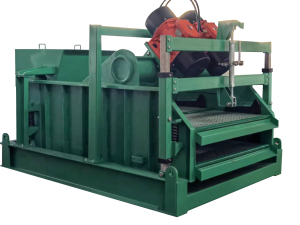
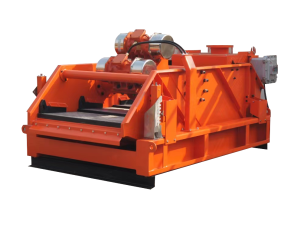
Different types of drilling mud have obvious differences in fluidity and solid content, leading to distinct unit area processing efficiency:
– Water-based mud: good fluidity, low adhesion, the conventional processing capacity reaches 8-15 cubic meters per square meter per hour
– Oil-based mud: high viscosity, easy to adhere to screen surface, the conventional processing capacity is controlled at 5-10 cubic meters per square meter per hour
In actual selection, avoid choosing equipment only marked with nominal parameters. Focus on the effective screening area of the shaker, and prevent false labeling of theoretical data from affecting on-site use effect.
2.Select Vibration Mode According to Well Type and Mud Property
Different vibration trajectories bring different material conveying speed and solid-liquid separation precision, which correspond to differentiated applicable drilling scenarios. Enterprises can match vibration types in combination with well structure, drilling depth and mud characteristics.
Linear Vibrating Shale Shaker
It is the most widely used conventional model in the industry. Featuring fast material conveying speed and large continuous processing volume, it is stable in operation and cost-effective. It is perfectly suitable for conventional vertical wells on land, working conditions with high solid content and large mud circulation displacement, and daily shallow and medium depth drilling construction.
Balanced Elliptical Shale Shaker
With optimized elliptical vibration track, it effectively reduces the phenomenon of screen surface blocking and mud sticking screen. The separation cleanliness of fine particles is greatly improved, and the overall service life of screen accessories is prolonged. This type is the preferred equipment for directional wells, horizontal wells and working conditions with high mud viscosity and abundant fine cuttings.
High-Frequency Variable Frequency Shale Shaker
Equipped with adjustable high-frequency vibration system, the vibration frequency ranges from 18Hz to 22Hz, and the vibration strength can reach 7.5G-8.3G. It aims at fine solid purification work, applicable to shale gas exploitation and working conditions needing to remove ultrafine particles below 44 microns, realizing high-precision mud purification.
3.Reasonable Matching of Screen Mesh Specification
Screen mesh is the direct working component for solid separation. The mesh number, layer quantity and manufacturing material jointly determine the screening precision and anti-wear performance.
Mesh Number Selection
Compliant with API industrial standard, different mesh numbers correspond to different particle interception sizes:
– Coarse screen 20-80 mesh: intercept large rock debris, particle size about 180-74 microns, used for primary rough filtration
– Conventional screen 80-120 mesh: universal matching specification, particle size 74-44 microns, suitable for most conventional drilling purification
– Fine screen 120-200 mesh: intercept tiny fine particles, particle size 44-20 microns, matched with horizontal wells and fine purification working conditions
It is worth noting that the higher the mesh number, the finer the separation precision, and the overall processing capacity will drop by about 30% when the mesh number doubles. Balance precision and efficiency according to actual demands.
Screen Layer Configuration
– Single-layer screen: simple structure, low procurement and maintenance cost, suitable for shallow wells and working conditions with low purification requirements
– Double-layer screen: mainstream recommended configuration, adopting coarse upper layer and fine lower layer layout. The processing efficiency can be increased by 30%-40% while improving separation quality
– Three-layer screen: applied to deep wells, high temperature and high density severe working conditions, achieving multi-stage gradient purification and thoroughly optimizing mud quality
Screen Surface Material
– Stainless steel screen: cost-effective, excellent wear resistance, widely matched with water-based mud working conditions
– Polyurethane screen: strong anti-blocking and anti-adhesion ability, long service cycle, suitable for oil-based mud and high wear working scenes
Wave-shaped and pyramid composite screen structures are preferred, which can effectively lift the opening rate and further promote solid-liquid separation efficiency.
4.Optimize Core Operating Parameter Range
Vibration G force, working frequency and screen deck inclination are adjustable core parameters, and reasonable setting can maximize equipment performance.
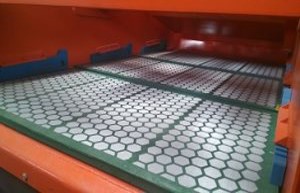
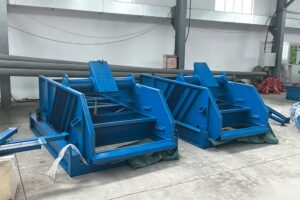
Vibration G Force
It represents the vibration intensity of the shaker, directly affecting cuttings discharge speed:
– Conventional working conditions: 5.0G-7.0G, meeting daily stable separation demands
– High density mud and fine particle working conditions: 7.0G-8.3G, enhancing fine solid removal capacity
Excessively high G force over 8.5G will accelerate abrasion of screen mesh and vibration motor, shorten equipment service life instead.
Working Frequency
-Low and medium frequency 10-15Hz: adapted to coarse particles and high viscosity mud, ensuring smooth conveying of materials
– High frequency 18-22Hz: matching fine particle separation scenes of horizontal wells and shale gas drilling
Screen Deck Inclination
The adjustable inclination range is generally -1° to +4°. Increasing the inclination accelerates cuttings discharging and boosts overall processing volume; reducing the inclination promotes fine screening effect and reduces moisture content of discharged solid phase. Workers can adjust parameters dynamically according to real-time mud state.
5.Adapt Material Grade and Safety Protection Standard
The service environment of drilling equipment is complex and harsh, including land desert, offshore platform, high temperature and salt fog corrosion. The material of shaker box and safety protection grade must meet site requirements.
Shaker Box Material
– Carbon steel with anti-corrosion coating: economical choice, applicable to conventional land water-based mud drilling
– 304/316 stainless steel material: excellent corrosion and salt fog resistance, the standard configuration for offshore platforms and oil-based mud projects
Driving Motor Specification
Oil field belongs to flammable and explosive dangerous area. The motor must reach Ex d IIB T4 explosion-proof grade, and the protection level shall not be lower than IP55 to realize dustproof and waterproof protection. Equipment used in desert areas can select IP65 high protection grade to cope with strong sand erosion; offshore equipment needs additional anti-rust and anti-corrosion structural design.
6.Evaluate Maintenance Convenience and Spare Parts Versatility
Good comprehensive performance also includes convenient daily maintenance, which can effectively reduce later operation cost and downtime loss.
Prioritize quick-hook screen fixing structure, realizing rapid screen replacement within 10 minutes and improving maintenance efficiency. The vibration exciter adopts adjustable eccentric block design, convenient for on-site staff to adjust G force and vibration state flexibly.
Meanwhile, confirm the universality of wearing parts such as screen mesh, sealing elements, bearings and driving motors. Choose equipment with complete supporting spare parts supply channels, guarantee timely replacement and maintenance in later use, and avoid production stagnation caused by difficult parts procurement. The overall welded frame features high rigidity, not easy to deform after long-term high-frequency vibration, maintaining stable equipment operation.
7.Quick Selection Scheme for Common Working Conditions
– Conventional land vertical well: linear shale shaker, vibration G force 5.5G-6.5G, double-layer screen with 80-120 mesh
– Directional well & horizontal well: elliptical shale shaker, vibration G force 6.5G-7.5G, double-layer or three-layer fine screen 120-180 mesh
– Shale gas fine purification: high-frequency variable frequency shaker, vibration G force 7.5G-8.3G, 150-200 high mesh screen
– Oil-based mud project: elliptical vibration model, equipped with polyurethane screen and stainless steel shaker box
8.Common Selection Pitfalls to Avoid
1.Only focus on nominal processing capacity, ignore actual effective screening area, resulting in insufficient on-site processing capacity
2.Blindly pursue ultra-high vibration G force, causing premature damage of vulnerable accessories and increasing replacement cost
3.Neglect explosion-proof and safety protection standards, failing to meet oil field safety construction specifications
4.Disregard working condition differences, uniformly match single specification screen mesh, leading to poor separation effect or low operating efficiency
The selection of drilling fluids shale shaker needs to take on-site drilling displacement, well type structure, mud properties and service environment as the core basis. Comprehensively evaluate vibration mode, screen configuration, operating parameters, equipment material and maintenance performance. Scientific matching of models and specifications can not only guarantee efficient solid control effect, protect follow-up drilling equipment, but also effectively control comprehensive drilling cost and create stable economic benefits for drilling projects.

 Arabic
  English
  Russian
  Spanish
  Portuguese