
What Is a Shale Shaker?
The shale shaker is the first stage equipment of solids control equipments used in drilling fluids process system. It is designed to separate drilled cuttings and other solid particles from drilling fluid (mud), helping to maintain proper mud properties and improve drilling efficiency.
After the drilling fluid returns from the well, it is evenly spread on the inclined screen cloth. Two vibrating motors run in reverse synchronization, generating high-frequency exciting force with a vibration intensity of 4~7G and an amplitude of 5~8 mm to drive the continuous vibration of the screen box. This equipment can effectively separate solid particles of 74 μm and above. The liquid phase and fine particles in the drilling fluid pass through the screen and fall into the mud tank for recycling, while large-sized cuttings jump and move forward along the screen surface under vibration and are finally discharged from the slag outlet, realizing continuous solid-liquid separation of drilling fluid and cuttings.
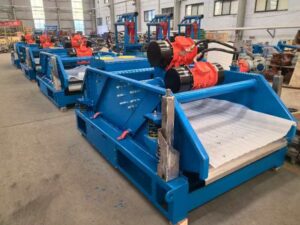
As the first stage of a التحكم في المواد الصلبة system, the هزاز الصخر الزيتي plays a critical role in protecting downstream equipment such as desanders, desilters, centrifuges, and mud pumps. Efficient solids removal reduces drilling fluid loss, lowers operating costs, and improves overall drilling performance.
The shale shaker works by using vibrating motors to generate linear, elliptical, or circular motion. As drilling fluid flows onto the shaker screens, liquid passes through the screen openings while solid particles are conveyed off the screen and discharged as waste.
Main Components of a Shale Shaker:
A shale shaker consists of several key components that work together to achieve efficient solids separation and drilling fluid recovery.
Separate drill cuttings from drilling fluid
Recover valuable drilling mud
Improve drilling fluid quality
Vibration motors generate the excitation force required for screening operations. Most modern shale shakers use two synchronized motors to create linear motion, ensuring efficient solids conveyance and fluid separation.
Functions:
Generate vibration force
Transport cuttings toward the discharge end
Improve screening efficiency
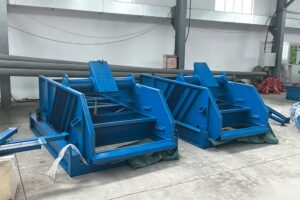
The shaker basket is the main vibrating structure that supports the screens and transmits vibration generated by the motors.
Functions:
Hold the shaker screens securely
Transfer vibration energy evenly
Support stable operation
This system allows operators to adjust the screen deck angle according to drilling conditions and fluid properties.
Functions:
Control solids retention time
Optimize fluid recovery
Improve screening performance
The feed box distributes drilling fluid evenly across the screen surface, preventing localized overloading and improving separation efficiency.
Functions:
Distribute drilling fluid uniformly
Reduce screen wear
Improve processing capacity
The base frame supports the entire shale shaker and absorbs operational loads during vibration.
Functions:
Provide structural support
Reduce vibration transmission
Ensure equipment stability
The control system manages motor operation, vibration settings, safety protection, and emergency shutdown functions.
Functions:
Control equipment operation
Protect motors from overload
Improve operational safety
How Does a Shale Shaker Work?
Drilling fluid containing cuttings enters the shaker through the feed box.
The vibrating screens separate solid particles from the drilling fluid.
Recovered drilling fluid passes through the screens and returns to the mud system, while drilled cuttings are discharged from the end of the shaker.
This process significantly reduces waste and lowers drilling fluid costs.
Types of Shale Shakers
Linear Motion Shale Shaker
Most widely used in oilfield drilling.
المزايا:
Balanced Elliptical Shale Shaker
Suitable for sticky formations and difficult drilling conditions.
المزايا:
Circular Motion Shale Shaker
Commonly used in some mining and industrial applications.
Applications
Shale shakers are widely used in:
How to Select the Right Shale Shaker?
Selecting the right shale shaker is essential for achieving efficient solids control, maximizing drilling fluid recovery, and reducing operating costs. Before purchasing a shale shaker, several key factors should be carefully evaluated.
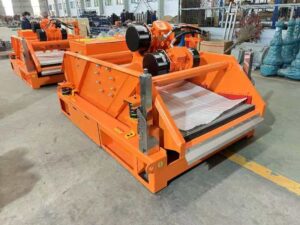
The first factor to consider is the required flow rate of the drilling fluid system.
The shale shaker must be capable of handling the maximum circulation volume without causing fluid overflow or reduced separation efficiency.
For example:
Small HDD projects: 100–300 GPM
Medium drilling projects: 500–800 GPM
Large oilfield rigs: 1,000 GPM and above
Always choose a shaker with sufficient safety margin for future operating conditions.
Screen area directly affects the shaker’s separation efficiency and fluid recovery rate.
A larger screen area provides:
Higher processing capacity
Better fluid recovery
Longer screen life
Reduced drilling fluid loss
Generally, shale shakers with 4 or 5 panels offer better performance for demanding drilling operations.
G-force refers to the vibration intensity generated by the shaker.
Higher G-force can:
Improve solids conveyance
Increase fluid recovery
Produce drier cuttings
Most modern shale shakers operate between 4G and 8G.
For oilfield drilling applications, adjustable G-force systems are highly recommended.
The shaker screen determines the separation size and overall performance of the system.
When selecting screens, consider:
API screen size
Drilling fluid properties
Formation characteristics
Desired separation efficiency
Common screen types include:
Composite Frame Screens
Steel Frame Screens
شاشات شريط الخطاف
Different vibration motions are suitable for different drilling conditions.
Linear Motion
The most common choice.
المزايا:
High processing capacity
Simple maintenance
Excellent solids transport
Balanced Elliptical Motion
Suitable for sticky formations.
المزايا:
Better cuttings drying
Improved screen life
Circular Motion
Typically used in specialized applications.
Downtime on a drilling site can be extremely costly.
Choose a shale shaker with:
High-quality vibration motors
Durable screen support structure
Easy screen replacement system
Low maintenance requirements
Reliable equipment reduces operating costs and increases productivity.
A professional manufacturer should provide:
Technical consultation
Equipment selection assistance
Spare parts support
After-sales service
Reliable support ensures long-term operation and minimizes project risks.
When selecting a shale shaker, focus on processing capacity, screen area, G-force, screen type, motion pattern, and equipment reliability. The best shale shaker is not necessarily the most expensive one, but the one that best matches your drilling conditions and operational requirements.
For customized recommendations, it is advisable to provide your drilling fluid flow rate, mud properties, and project details to an experienced solids control equipment manufacturer.
Why Choose Our Shale Shaker?
Our shale shaker is designed to handle large drilling fluid volumes while maintaining excellent solids separation efficiency.
Benefits:
Higher drilling efficiency
Reduced mud overflow
Stable operation under demanding conditions
The vibration intensity can be adjusted according to different drilling conditions.
Benefits:
Better cuttings drying
Improved drilling fluid recovery
Longer screen life
Typical G-force:
4.0G – 7.5G Adjustable
Compatible with industry-standard shaker screens.
Benefits:
Easy screen replacement
Lower operating costs
Flexible screen selection
Available API:
API 20
API 40
API 60
API 80
API 100
API 120
API 140
API 170
API 200
API 230
API 270
Equipped with internationally recognized or high-quality domestic vibration motors.
Benefits:
Stable performance
Low maintenance
Long service life
The shaker basket and frame are manufactured from high-strength steel and subjected to strict welding inspections.
Benefits:
Reduced structural fatigue
Longer equipment lifespan
Improved reliability
The modular design allows quick replacement of screens and wear parts.
Benefits:
Reduced downtime
Lower maintenance costs
Faster service operations
Compared with major international brands such as Derrick, NOV, and M-I SWACO, our shale shaker provides similar performance at a significantly lower investment cost.
Benefits:
Faster return on investment
Lower spare parts costs
Excellent value for money
Our equipment has been supplied to projects involving:
Oil & Gas Drilling
HDD Drilling
Water Well Drilling
Mining Slurry Treatment
Trenchless Projects
Benefits:
Proven field performance
Practical engineering support
Customized solutions
Standard models can be delivered within a short production cycle.
Benefits:
Faster project startup
Reduced waiting time
Better project scheduling
In addition to shale shakers, we also supply:
Mud Cleaners
مزيلات الرمل
مزيلات الطمي
أجهزة الطرد المركزي
Mud Tanks
المحرضين
Mud Guns
Vacuum Degassers
Benefits:
One-stop procurement
Better system integration
Simplified project management
How to Select the Right Screen Mesh for a Shale Shaker?
Selecting the right screen mesh is one of the most important factors in achieving effective solids control. The screen mesh determines the size of particles that can be removed from the drilling fluid and directly affects processing capacity, fluid recovery, and screen life. A finer screen does not always mean better performance. The ideal screen should provide a balance between separation efficiency, flow rate, and operating cost.
The first factor to consider is the drilling stage and formation conditions. During the initial drilling phase, larger drill cuttings are generated, and coarser screens such as API 40, API 60, or API 80 are commonly used. These screens provide high processing capacity, resist plugging, and offer longer service life. As drilling progresses and finer solids are produced, operators typically switch to API 100, API 120, or API 140 screens to improve solids removal and maintain drilling fluid quality. Among these options, API 120 is one of the most widely used screen sizes because it offers an excellent balance between flow capacity and separation performance.
Mud properties also play an important role in screen selection. High-viscosity drilling fluids tend to blind or plug fine screens more easily. In such cases, coarser screens such as API 80 or API 100 may be more suitable to maintain acceptable throughput. For lower-viscosity fluids, finer screens such as API 120, API 140, or even API 170 can be used to achieve better solids separation without significantly affecting flow capacity.
Processing capacity must also be considered. As the circulation rate increases, the screen must be capable of handling larger volumes of drilling fluid. If the flow rate is very high, selecting an excessively fine screen may cause fluid overflow and reduce drilling efficiency. For high-capacity drilling operations, API 80 to API 120 screens are often preferred, while lower flow-rate systems can successfully utilize API 140 or finer screens.
Formation characteristics are another important consideration. In sandstone formations, where larger particles are commonly generated, API 80 or API 100 screens are often sufficient. In shale formations, API 120 or API 140 screens are generally recommended to remove finer solids effectively. For applications involving extremely fine particles, such as certain deep wells or specialized drilling projects, API 170, API 200, or even finer screens may be required. However, operators should be aware that finer screens usually reduce processing capacity and may require more frequent cleaning or replacement.
In practical field operations, the most common recommendation for shale shakers is API 120 screens. This mesh size provides a good balance between solids removal efficiency, drilling fluid recovery, screen life, and processing capacity. For mud cleaners, which process fluid after hydrocyclone separation, API 140 screens are often preferred because they can effectively recover drilling fluid while removing finer solids discharged from the desander and desilter cones.
Ultimately, there is no single screen mesh that is suitable for every drilling condition. The optimal choice depends on drilling fluid properties, formation characteristics, circulation rate, and the desired level of solids control. By selecting the appropriate screen mesh, operators can maximize drilling efficiency, reduce mud losses, extend screen life, and improve the overall performance of the solids control system.
Determining the correct number of shale shakers is critical for maintaining efficient solids control and ensuring the drilling fluid system can handle the required circulation rate. Selecting too few shakers may result in fluid overflow, reduced separation efficiency, and excessive screen wear, while selecting too many can unnecessarily increase equipment and operating costs.
The primary factor in determining the number of shale shakers is the maximum drilling fluid circulation rate. The total processing capacity of the shale shakers should always exceed the maximum expected flow rate of the drilling system. As a general rule, the combined capacity of the shakers should be at least 20% to 30% higher than the actual mud circulation rate to provide a safety margin during peak operating conditions.
Screen area is another important consideration. Larger screen areas allow more drilling fluid to be processed and improve separation efficiency. Modern shale shakers equipped with four or five screen panels can typically handle higher flow rates than older models with smaller screen areas. Therefore, both the number of shakers and the effective screen area should be evaluated together.
The drilling program and formation characteristics also influence shaker requirements. Wells generating large amounts of drilled solids often require additional screening capacity to prevent overloading. In difficult formations, such as reactive shale or formations producing fine solids, extra shaker capacity can help maintain drilling fluid quality and improve overall solids control performance.
Operational reliability is another key factor. Most drilling rigs are designed with a backup philosophy to minimize downtime. For example, if calculations indicate that two shale shakers are sufficient to handle the required flow rate, many operators will install three units so that one shaker can serve as a standby unit during maintenance or screen replacement. This arrangement improves operational flexibility and reduces the risk of drilling interruptions.
For typical drilling operations, the following guidelines are commonly used. Small HDD or water well drilling systems often operate with one shale shaker. Medium-sized drilling rigs may require two shakers to handle circulation rates efficiently. Large oil and gas drilling rigs frequently use three or more shale shakers operating in parallel to provide sufficient processing capacity and redundancy.
As a practical example, if each shale shaker is rated for 500 GPM and the drilling system circulates 1,000 GPM of drilling fluid, two shakers could theoretically handle the flow. However, most operators would install three units to provide reserve capacity and ensure continuous operation under varying drilling conditions.
Ultimately, the number of shale shakers should be determined based on circulation rate, screen area, solids loading, drilling conditions, and operational reliability requirements. Proper sizing not only improves solids removal efficiency but also extends screen life, reduces drilling fluid losses, and lowers overall operating costs. For the most accurate recommendation, equipment manufacturers typically evaluate the drilling fluid flow rate, mud properties, and project-specific requirements before selecting the appropriate shaker configuration.
窗体顶端
شاشات هزازة الصخر الزيتي are consumable components, and their service life depends on several factors, including drilling conditions, screen mesh size, drilling fluid properties, solids content, and operating practices. As a result, there is no fixed replacement interval that applies to every drilling operation.
Under normal drilling conditions, a shaker screen may last anywhere from a few days to several weeks. In formations with high solids loading or abrasive particles, screen life can be significantly shorter due to increased wear. Finer screens, such as API 170 or API 200, generally have a shorter service life than coarser screens because their smaller openings are more susceptible to plugging and damage.
The properties of the drilling fluid also affect screen longevity. High-viscosity mud can increase screen loading and accelerate wear, while improper fluid distribution may cause localized damage to the screen surface. In addition, excessive vibration, incorrect screen installation, and operating the shaker with damaged screens can all reduce screen life.
Looking for a Reliable Shale Shaker Manufacturer?
Contact our engineering team today for a free technical proposal and quotation.

 Arabic
  English
  Russian
  Spanish
  Portuguese