
In the fluid handling industry, slurry pumps and mud pumps are often confused and generally referred to as mud pumps. However, there are fundamental differences in working principle, structural design, applicable media and application scenarios. Many purchasers and engineers choose the wrong pump type, resulting in fast component wear, insufficient pressure, low efficiency and even premature equipment failure. This article clearly compares the two pumps and provides practical guidance for proper selection.
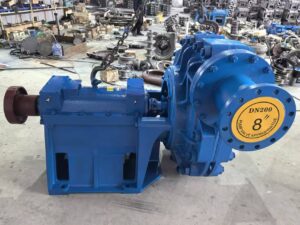
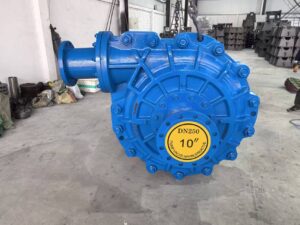
1. Basic Definition & Working Principle
1.1 Slurry Pump
A slurry pump is a centrifugal pump. It generates centrifugal force through high‑speed rotating impellers to transport solid‑liquid mixtures. It delivers continuous and stable flow with large capacity and moderate pressure. Its wide flow‑passage components allow large solid particles to pass through easily. It is widely used in mining, dredging and coal‑washing industries.
1.2 Mud Pump
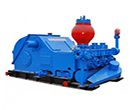
A mud pump is a reciprocating piston pump. It sucks and discharges fluid by reciprocating piston movement inside cylinders. It produces pulsating flow with extremely high pressure and relatively low capacity. Designed with high‑precision sealing structures, it mainly provides high‑pressure mud circulation for oil drilling and geological exploration.
2. Key Performance Comparison
2.1 Transported Media
• Slurry Pump: Handles coarse, hard and high‑concentration solids including ore tailings, sand, coal ash, river silt and industrial waste residue with strong abrasion.
• Mud Pump: Designed for fine drilling mud mainly bentonite slurry. It features fine particles and high viscosity, requiring excellent sealing rather than high wear resistance.
2.2 Pressure & Flow Rate
• Slurry Pump: Low‑pressure, large‑flow design for long‑distance bulk slurry transportation.
• Mud Pump: High‑pressure, small‑flow design for deep‑well drilling, providing far higher pressure than slurry pumps.
2.3 Wear Resistance & Structure
• Slurry Pump: Built for heavy abrasion resistance. Impellers, casings and liners are made of high‑chrome alloy or rubber to resist erosion.
• Mud Pump: Focused on pressure resistance and sealing. Pistons, liners and valves are precisely manufactured but easily damaged by large hard particles.
2.4 Wear Parts & Maintenance
• Slurry Pump: Wear parts are mainly wetted components, easy to replace with moderate maintenance cost.
• Mud Pump: High‑precision spare parts including pistons, cylinder liners and valves, complicated maintenance and higher replacement cost.
3. Typical Applications
Applications of Slurry Pump
1. Mining: tailings transportation, slag discharge, mineral processing slurry transfer
2. Environmental dredging: river silt removal, port sand pumping, sludge transportation
3. Power plants & coal washing plants: fly ash and coal slurry transportation
4. Chemical & construction industries: high‑concentration waste and particle‑containing wastewater transfer
Applications of Mud Pump
1. Oil & gas deep‑well drilling for mud circulation and cooling
2. Geological exploration, water well drilling, horizontal directional drilling
3. High‑pressure grouting and deep‑well wall protection
4. Selection Summary & Suggestions
A simple rule: Use slurry pumps for sand, slag and tailings transportation; use mud pumps for drilling projects.
If your working condition involves large solid particles and high flow demand, choose a slurry pump. For deep‑well drilling requiring high‑pressure fine mud circulation, select a mud pump. Misapplication will shorten service life, reduce system efficiency and increase operating costs.
Understanding the essential differences helps engineers select the right pump for stable and long‑term operation in solid‑liquid handling projects.

 English
  Russian
  Spanish
  Portuguese
  Arabic